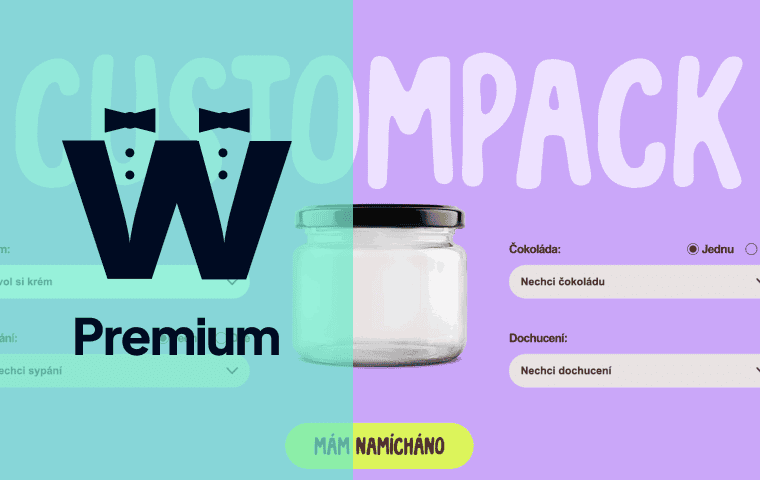
for example, on the page with our custom coffee offer
(https://eshop.henri.cz/kavanamiru/) and we really appreciate its flexibility.
We easily set the form up exactly according to our needs without…

A custom shipping module for Shoptet Premium: the price comes from your logic, not from the Shoptet price list. The customer enters a postcode; the weight, pallets and warehouses come from the cart and from Shoptet and the price is written into the order. You set the parameters in the admin.
The Shoptet shipping price list keeps it simple: a fixed price per shipping method, weight bands, free shipping above a certain order value. For parcels that is enough. With heavy and palletized goods, though, the price depends on where the goods are going, how much they weigh, how many pallets they take up — and which warehouse they leave from.
For online stores like that we build a custom shipping module. We work the price out with your logic, Shoptet doesn't. You supply the formula, the table or the rules — anything that can be described mathematically — and we turn it into a model that runs right in the order.
In the order the customer enters nothing but the postcode the goods are going to. The rest we take ourselves: from the cart and from Shoptet we read the warehouses, the weight, the dimensions, the pallet count and the distance. We work the price out from that and write it back into the order, so you carry on working with it exactly like with any other shipping method.
Optionally we ask the carrier's API directly — TopTrans or Geis, for instance — for the current price and add your margin on top. Fixed (the price from the API plus €4), a percentage (the price times your percentage), or custom logic, such as pallet deposits.
You then change the formula parameters yourself in the admin: prices, weight bands, surcharges, margins and pallet deposits. It is always a tailor-made solution — every client has different logic.

Shoptet lets you set a fixed price per shipping method, weight bands and free shipping above a certain order value. For parcels that is enough. Your own calculation starts to make sense where the price depends on the delivery location, the number of pallets or the warehouse the goods leave from.
If the price list in Shoptet fits you, leave it be and save the money. You need us the moment you're working shipping out on the side in Excel, or guessing it and paying for the guess.
It does one thing: in the order it works the shipping price out with your logic and writes that price into the order.
You can try how a calculation like that turns out right below. It is a demo on a made-up cart and a made-up formula — your formula will be different.
A made-up cart and a made-up formula — but the mechanics are the same as on a real order.
Put something in the cart and I'll do the maths.
In production this formula is replaced by your store's logic — your rates, your warehouses and, where you use one, your carrier's API response. The customer still types nothing but the postcode.
As long as you ship from a single warehouse, the shipping price is simple: one distance, one price list. With two warehouses or more it falls apart — the same customer is fifty kilometers from one warehouse and three hundred from the other, but the store still has just one price list.
Stores usually settle it with an average. On the nearer orders the customer then overpays and some of them walk away; on the further ones you take the hit. The further apart the warehouses are, the more expensive that compromise gets.
Your own calculation doesn't have to average anything. It knows which warehouse the goods will leave from, it knows the delivery postcode and it works the price out for that particular route. The same formula also takes in the weight, the dimensions and the number of pallets — everything that really sets the price on heavy goods.
Count on roughly a month from the moment you approve the quote.
You pay once for building the module, then monthly for running it. All prices are excl. VAT.
€1,200 – €2,000
excl. VAT, depending on how complex the formula is and how many carriers we connect
Shoptet Premium is a condition — the module needs the open API and custom code in the checkout. Count on roughly a month from the moment you approve the quote.
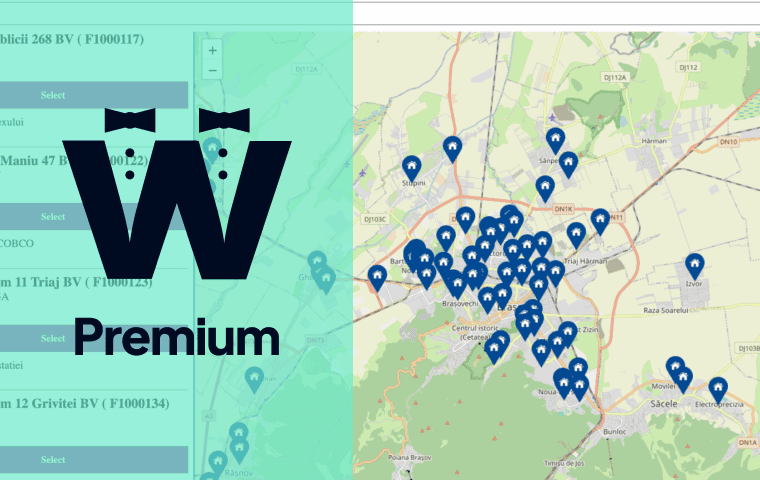
Two different things get mixed up here. The pickup point widget deals with where the customer collects the parcel: it shows them lockers and pickup points on a map and writes the chosen one into the order. Shipping price calculation deals with how much delivery to the address will cost.
If you sell parcel goods abroad and the pickup points are missing from the list, you need the widget. If you haul heavy or palletized goods to an address and you price it on the side today, you need your own calculation. Sometimes both — and then they are two separate services.
Send us the price list, the table or the rules you price shipping by today — an Excel file or a photo of your notes is fine. We'll look at whether it can be turned into a formula and tell you the price and the timeline.
The consultation is free and commits you to nothing. If we think the shipping price list in Shoptet is plenty for you, we'll say so outright.
Thanks to its API, Shoptet Premium opens up new possibilities. ERP and payment integrations, a pickup point widget, advanced configurators and add-ons. We're a certified Premium Partner.


We value every opinion. We listen to our clients and we're ready for praise as well as criticism.
A quality website can easily become your best employee. It will make you money 24 hours a day, 365 days a year, with no salary and no vacation. All you have to do is start.

Call +420 728 089 029 and Tomáš will pick up – the captain of our ship, the captain of our team, the owner.
If you'd rather write than call, email us at jsme@webotvurci.cz. A member of our crew usually replies within 24 hours.